Scale a recipe for 4 up to 6 and 3 eggs become 4½. The pan and the time do not scale
· 3 min read
Scaling a recipe from 4 servings to 6 multiplies every ingredient by 1.5. That is easy for flour and awkward for eggs: 3 eggs become 4½. The arithmetic is exact. What it cannot do is tell you which parts of a recipe were never about quantity in the first place.
The multiplication
Divide the servings you want by the servings the recipe makes, and multiply everything by that. Six over four is 1.5. Ten over four is 2.5. The recipe scaler does this and rounds the result to a fraction you can measure.
Half an egg is a real problem. Beat the egg and use about half of it, or round to 4 or 5 and adjust the liquid to match.
What scales cleanly
- Ingredients by weight. Grams multiply exactly. If the recipe gives cups, a cup of flour is not a fixed weight, so weigh it if you can.
- Liquids, sugar, fat and flour in most cooking, such as soups, stews and sauces, where the result is forgiving.
What does not
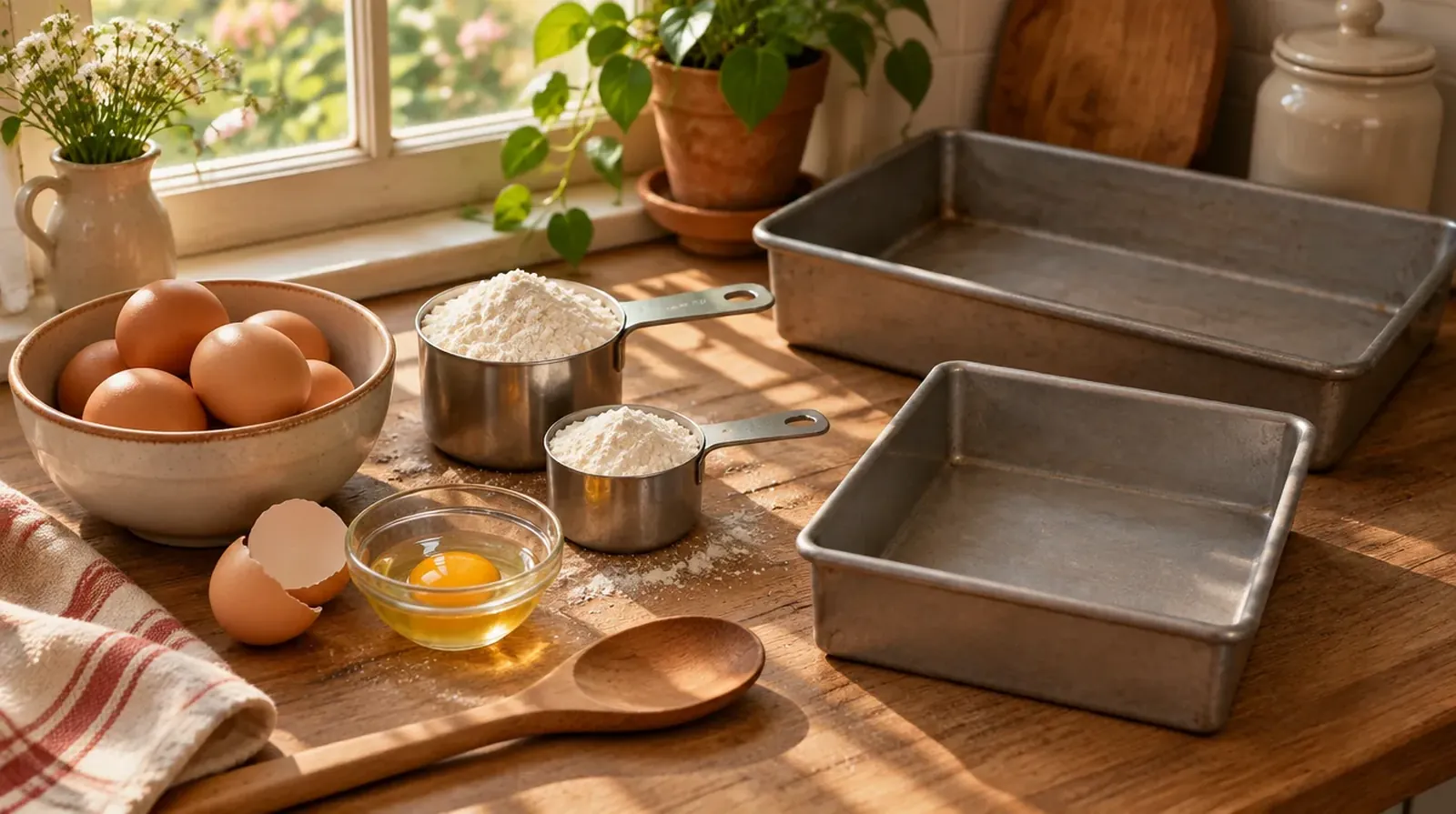
- The pan. A bigger batch needs a bigger pan, and pans are sized by area. An 8-inch square pan is 64 square inches; a 9 by 13 is 117. Filling the larger pan to the same depth needs about 1.83 times the batter, not twice.
- Baking time. It depends on the depth and the pan, not the amount. A deeper cake takes longer; a shallower one less. There is no multiplier for it. Check early and test for doneness.
- Salt, spices and strong flavours. Many cooks scale these by less than the rest and season to taste at the end.
- Leavening in large batches can behave differently. The sum is a starting point for a cake, not a guarantee.
- Cooking time on the stove. A larger pot takes longer to come to heat and to reduce.
Scale your own recipe with the recipe scaler. The quantities are exact; the cooking is yours.